Koblenz: historic city with charm at the Deutsches Eck
 Familie Hahn
Your hosts at Waldsee Rieden
4 min read
Familie Hahn
Your hosts at Waldsee Rieden
4 min read
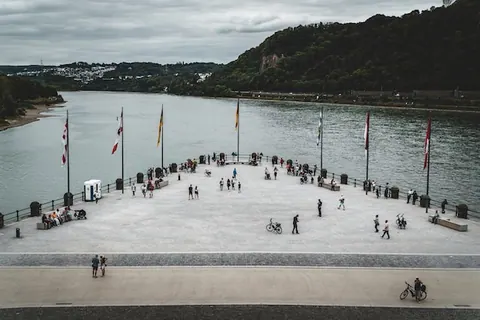
Koblenz: the city at the Deutsches Eck
Koblenz is famous for the Deutsches Eck, the man-made headland at the point where the Moselle flows into the Rhine. With around 113,400 inhabitants, Koblenz counts as a major city. It lies in the north of Rhineland-Palatinate, close to the volcanic region around the Laacher See and to the Traumpfade trails for walkers and strollers. That makes Koblenz a popular destination for visitors from the Eifel region, who after quiet walks in the countryside find themselves longing for a little city life, with plenty of scope for strolling and shopping.
The city advertises itself with the slogan “a city with wonderful views”, and not without reason. Along the Moselle and the Rhine you quickly lose track of time watching the cargo boats and passenger ships go by. The imposing Kurfürstliches Schloss, the electoral palace on the bank of the Rhine, is being restored in time for the Bundesgartenschau federal garden show in 2029 and is closed to visitors, though from the outside it remains an eye-catcher. The historic town hall in the former Jesuit college in the middle of the old town is also worth seeing. A short walk from there, the tourist information office will give you more ideas for places you really must not miss during your stay in Koblenz.
The history of Koblenz: from its founding to the present day
Archaeological finds suggest that the area of the city was settled as early as the Stone Age. The first fortifications date from the time of the Roman Empire, as do the first bridges across the Rhine and the Moselle. Throughout its history the city was subject to constant change and had to live through a number of armed conflicts. After the Roman troops withdrew, the Franks took the area, before the archbishops and prince-electors of Trier assumed power in AD 1018. From 1794 until early 1814 the city was under French control, until the Russian army moved in and occupied it. The Congress of Vienna that followed handed the city to Prussia. Today it belongs to Rhineland-Palatinate. Thanks to those constantly changing cultural influences and two world wars, every corner of the city has places, monuments and squares that bear witness to more than 2,000 years of history.
Places to see and things to do in Koblenz
Ehrenbreitstein Fortress, opposite the mouth of the Moselle, is a must. The Prussians used the complex, originally built by the Electorate of Trier, to defend the city. Today the fortress houses the Landesmuseum Koblenz, the state museum, a youth hostel, a memorial dedicated to the German army and various rooms for events. No visit to Koblenz is complete without a ride in the cable car over the Rhine. The gondolas cross the river every few minutes, linking the Rheinanlagen gardens with Ehrenbreitstein Fortress. The city celebrated the opening of the cable car just in time for the Bundesgartenschau federal garden show in Koblenz in 2011. It has served ever since as an environmentally friendly means of transport and an attraction for visitors.
The city offers a varied museum scene. Given its long history, you have plenty of opportunities to learn about the Rhine and the Moselle and about the city’s past, or to visit the Ludwig Museum and the Mittelrhein-Museum.
Shopping streets and shopping centres
For shopping, head for one of the shopping centres or take a relaxed stroll along the shopping street in the historic old town. The Löhr Center, the Forum Mittelrhein and the Schängelcenter in the heart of this lively city are all known for their wide choice of shops.
More attractions in the area
Koblenz is wonderfully easy to reach from the holiday village at the Riedener Waldsee. The Eifel holiday park offers superbly equipped chalets with a view of the lake and all the comforts of a five-star hotel, set in the beautiful countryside of the Eifel. Holiday homes such as Annika, Tommy and Susi leave nothing to be desired, with a sauna, an excellent kitchen and fast internet. From here you can easily reach other attractions nearby as well, for example:
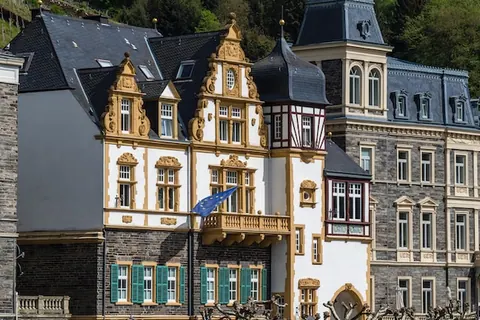
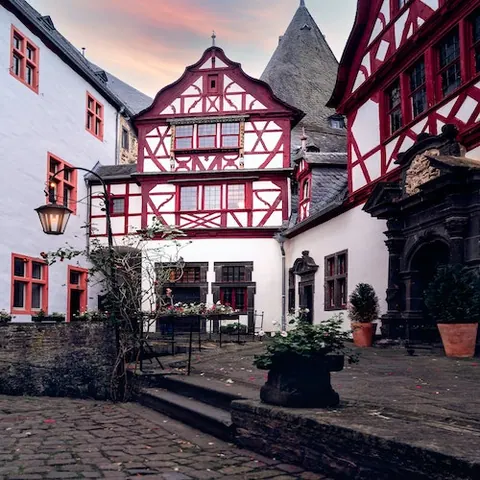
- The Rhine and the Moselle with their many half-timbered villages
- Countless castles and palaces
- Wine festivals at certain times of year
- Boat trips on the Rhine and the Moselle
- Mayen, the gateway to the Eifel and a starting point for walks on the Traumpfade trails
- The Hohe Acht, the highest mountain in the Eifel
- the tallest cold-water geyser on earth – Geysir Andernach
- The little towns of Cochem and Bernkastel-Kues on the Moselle with their romantic lanes, cafés and restaurants
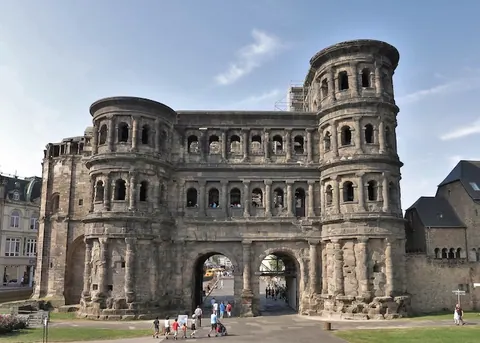
- Trier, the oldest city in Germany, with its many historic Roman buildings.
If you are travelling with children, these days out are well worth it:
- Klotten Wildlife and Adventure Park
- Daun Wildlife Park
By car you can reach the city, in the north of Rhineland-Palatinate, from any direction via the A3 or A61 and the A48, which runs right past it. Koblenz is also easy to reach by train or long-distance coach, thanks to the many services that stop here.
The “Deutsches Eck” is a man-made headland at the point where the Rhine and the Moselle meet. It takes its name from the house of the Teutonic Order that once stood near the mouth of the Moselle.
According to the Federal Statistical Office, the city had around 113,600 inhabitants in 2021. That means the population of the city at the Deutsches Eck has stayed relatively constant for three decades.
Depending on how extensive a boat trip you choose on the Rhine or the Moselle, a day on the water currently costs between 10 and 25 EUR. You can often save with combined offers that include a boat trip on the Rhine or the Moselle together with admission to other attractions, such as castles and palaces.
Your base for exploring
This destination is within easy reach of our holiday homes
Three holiday homes with their own outdoor sauna, whirlpool bath and wood-burning stove on the Sonnenterrasse by the Riedener Waldsee. This is where every day out in the Eifel begins.
Familie Hahn
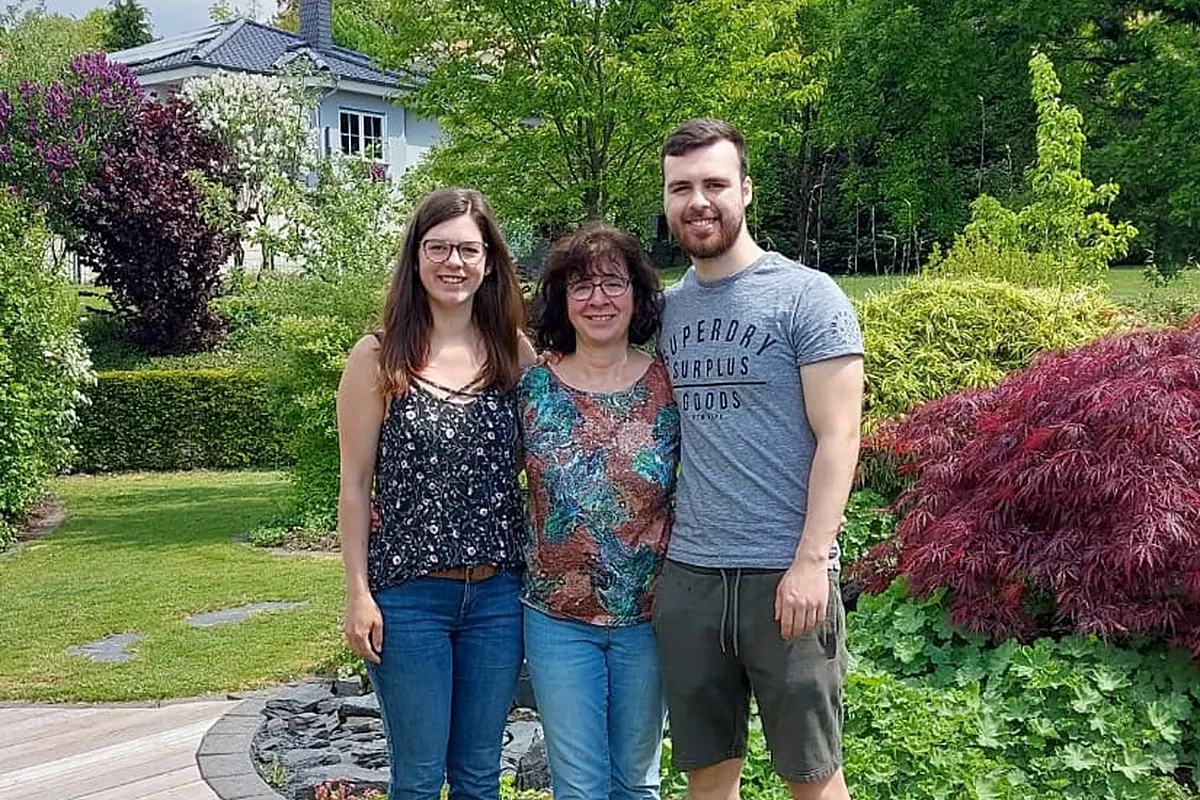
Susanne, Carmen and David Hahn rent out the three holiday homes on the Sonnenterrasse in Rieden and have known the Eifel for more than ten years.