The Rhine: a romantic waterway in the heart of Europe
 Familie Hahn
Your hosts at Waldsee Rieden
9 min read
Familie Hahn
Your hosts at Waldsee Rieden
9 min read
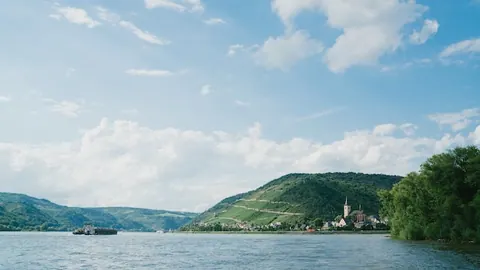
There are many popular wine regions along the Rhine. On the Upper Middle Rhine in particular, between Koblenz and Rüdesheim, you will find not only beautiful old castles to admire but also superb wines to taste. Switzerland has its share as well: the canton of Graubünden is home to a number of exquisite growing areas that produce some of the finest wines, among them Pinot, Riesling and Rhine wine. Reichenau Castle, which stands in this region, is one of the best known.
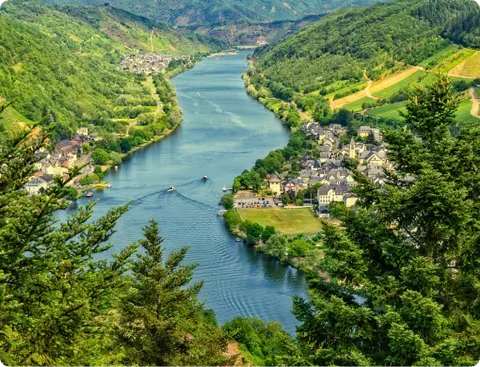
The Rhine has always been one of the most important rivers in the whole of Europe. The mighty river has a total length of 1,233 km and runs through 6 countries, passing the Andernach cold-water geyser on its way. Throw a message in a bottle into the water here and it may be decades before anyone finds it. Many holidaymakers come to spend restful, exciting days beside this much-loved European river. The Rhine offers wonderful landscapes as well as cultural and historical attractions. Along the river you will also find plenty of holiday accommodation — for example at the Eifel holiday park by the Waldsee Rieden — which is ideal for families and dog owners looking for undisturbed, restful days.
The Rhine as a major European waterway
For more than 2,000 years the Rhine has been one of Europe’s most important waterways. The river links the Baltic and the North Sea with one another and with southern Europe. That made it as vital for trade and commerce as it was for moving troops. Almost every town directly on the Rhine grew in influence and wealth over the centuries by taking part in the trade along the river and in the transport of goods on it. As long ago as 2002, the Upper Middle Rhine Valley between Bingen, Rüdesheim and Koblenz was declared a UNESCO World Heritage Site. Its historic role as a waterway did much to earn the river that nomination. All told, this great European river runs for 1,233 kilometres across 6 different countries. At Reichenau in the Swiss canton of Graubünden, the Vorderrhein and the Hinterrhein join to form the Alpenrhein, which then flows into Lake Constance.
The grape varieties grown along the Rhine
Most of the grape varieties are grown in the Middle Rhine area. They are predominantly white grapes, with Riesling by far the most widely planted at around 65 %. You will find other varieties here as well, however, such as Pinot Noir (Spätburgunder), Müller-Thurgau, Pinot Blanc (Weißburgunder), Pinot Gris (Grauburgunder) and Dornfelder.
Most of the growing areas are worked by small family businesses, where growing the grapes and making the wine are usually in the same hands. As a result, most of these wines can only be bought directly from the growers themselves. There are more than 150 wine estates on the Middle Rhine. The region is divided into 2 districts, 11 collective vineyard sites (Großlagen) and 111 individual sites (Einzellagen).
What makes the Rhine wine regions special
Wine was already being grown on a large scale along the Rhine in the Middle Ages. The climate and the natural conditions of the region encouraged it. Thanks to the soils and the climate, German wine is notably light, crisp and fruity. Germany has 13 wine-growing regions in all, several of them to the left and right of the Rhine. At around 16,000 hectares, Baden is the third-largest wine-growing region in Germany. It stretches around 400 km along the river, to the north and to the south. The region begins in Lake Constance, through which the river flows. The popular Gutedel — a white wine — comes from the Markgräflerland, which lies in the Black Forest on the Swiss border. Red and white Pinot grapes, by contrast, grow mainly on the Kaiserstuhl and the Tuniberg. In the Ortenau, grapes are grown for Pinot Noir and Riesling. The second-largest wine region is the Palatinate. Here, too, wine growing goes back to Roman colonisation. Growers in the Palatinate work mainly with Riesling, but you will find other varieties such as Gewürztraminer, Silvaner, Scheurebe and Morio-Muskat here as well. On the Middle Rhine the vines do best on steep slopes laid out as terraces. Riesling is the great favourite, though Müller-Thurgau, Kerner and Pinot thrive here too. More impressive wine country lies along the tributaries to the west, the Moselle and the Ahr. All this makes the Vulkaneifel, the volcanic Eifel, close as it is to both the Rhine and the Moselle, a real gem among the wine regions — reason enough on its own to draw wine lovers and connoisseurs to the area year after year.
Festivals and events along the Rhine
People here do not only work, they know how to celebrate. Chief among the celebrations are the cheerful, well-lubricated wine festivals held at the end of each season. Cultural events and live performances are just as plentiful along the Middle and Upper Rhine. That gives visitors something to enjoy all year round, and a chance to get to know the way of life and the culture of the people who live here. From absorbing exhibitions to romantic guided walks in Koblenz and richly stocked museums, the Rhine and its culture have plenty for you to discover on holiday. Market days and street festivals belong to that picture, as do historic village centres and old castle ruins, which still bear witness to how people lived together here in the past. Alongside all the culture and history, the Middle Rhine in particular offers picture-book scenery and no shortage of untouched countryside. How about a boat trip on the river? Or would you rather set off on a long walk through the beautiful Vulkaneifel, the volcanic Eifel, that takes you to the remotest and loveliest corners of this river? Whichever you choose, you can be sure your experiences will be vivid, exciting and unforgettable.
Places worth seeing on the Rhine
There are countless sights to admire on the Lower, Middle and Upper Rhine alike. Cologne Cathedral, for example, draws many thousands of visitors every year. It stands only a few metres from the riverbank, right beside the equally famous Hohenzollernbrücke and Cologne’s main station. The Middle Rhine has a particular wealth of places worth seeing, such as the Drachenquelle spring in Bad Honnef or the “Deutsches Eck”, where the Rhine and the Moselle meet. The Empress Augusta gardens in Koblenz, the Electoral Palace in Trier on the Moselle and Stolzenfels Castle are all well worth a visit too. On the Upper Rhine you can admire the Gutenberg Museum and the cathedral in Mainz, or take a relaxing dip in the thermal baths at Badenweiler. The old city of Speyer always repays a visit as well. In the border country between Germany and France, Strasbourg and Colmar are beautiful towns that draw large numbers of visitors year after year.
Castles, palaces and historic buildings on the Middle Rhine
Historic buildings and traces of the past crowd the whole length of the Rhine, but the Middle Rhine has more of them than anywhere else, and some are remarkably well preserved. You can visit the famous fairy-tale Bürresheim Castle in the Nettetal, which has served as a location for more than one film, or explore the historic centre of the shopping town of Mayen. Monreal is always worth a visit too, known as the loveliest half-timbered village in the whole of the Eifel. If you are spending your holiday on the Middle Rhine with children, there is plenty here for them as well that you should not miss. Tollipark Mayen alone is enough to make children’s eyes light up. The many castles and palaces, and fine bathing lakes such as the Waldsee Rieden, all lie within easy reach of the Rhine and of its tributary the Moselle, famous for its many villages with their wonderful wine festivals. This is where you can book somewhere secluded and yet central for your family holiday, and enjoy the sights of this magnificent river to the full.
Popular places to stay in the nearby Eifel
It does not have to be an expensive hotel — in the Eifel you will find plenty of holiday accommodation that is good value and well placed, within easy reach of the Rhine or of its tributary the Moselle. The Eifel holiday park at the Waldsee Rieden is a particularly good choice. Framed by wooded hills, the holiday homes stand on terraces around the idyllic Riedener Waldsee, central and secluded at the same time. You can enjoy the wonderful view and be sure of a completely undisturbed holiday in the Eifel. Renting a holiday home near the river brings you a number of advantages over renting a flat or staying in a hotel. For one thing, you can move about more freely and you share the house with no landlord and no neighbours. For another, you have the peace and privacy of your own four walls, with no need to worry that you might be disturbing other guests. That matters most of all if you are bringing a dog or small children, whose noise levels can only be regulated so far. The lakeside Eifel holiday homes at the Waldsee Rieden, particularly those on the Sonnenterrasse, also stand out for their individuality. Because they are privately owned, every house is unique. Several restaurants around the holiday park will keep you well fed, and here, too, the owners are happy to see dogs and small children. There are many reasons to recommend the Waldsee Rieden for a holiday home in the Eifel. Some of the lovingly furnished houses are luxuriously equipped with every comfort. A hooded beach chair, an open fireplace with firewood, a modern bathroom with a rainfall shower, a sauna and free Wi-Fi are among the things you can expect when you book a place like this for your holiday on the Rhine. Owners of electric cars can charge up in comfort at the house’s own EV charging point during their stay. The top places to stay that offer this level of comfort are the Holiday Homes “Tommy”, “Annika” and “Susi”.
In conclusion: a restful holiday on the Rhine
There is a great deal to discover along this river, which runs for 1,233 kilometres through six countries. No wonder that thousands of visitors set out every year to explore its cultural, historical and scenic riches under their own steam. On a longer stay in particular, the kind of accommodation you choose does much to decide whether the holiday works. The Eifel is the place to rent a holiday flat or holiday home easily and at a fair price — one of the top holiday homes on the Sonnenterrasse around the beautiful Waldsee Rieden, for instance.
The lavish wine festivals in the areas along the Rhine take place each year once the grape harvest is in. Depending on the climate and the weather, that can be as early as August or as late as October.
Every stretch of the Rhine has plenty of sights to offer. Old palaces such as Stolzenfels Castle, but also monasteries, museums and monuments, draw admiring visitors from all over the world.
Lovely as the Rhine is to look at, it is no river for swimming. The fast current and the shipping traffic make swimming in one of Europe’s largest rivers extremely dangerous.
There are plenty of ways to take a short or a longer boat trip on the Rhine. Scheduled sailings and combined trips to the Loreley, panoramic cruises to Koblenz and short party-boat cruises can all now be booked online with the operators quickly and easily
Your base for exploring
This destination is within easy reach of our holiday homes
Three holiday homes with their own outdoor sauna, whirlpool bath and wood-burning stove on the Sonnenterrasse by the Riedener Waldsee. This is where every day out in the Eifel begins.
Familie Hahn
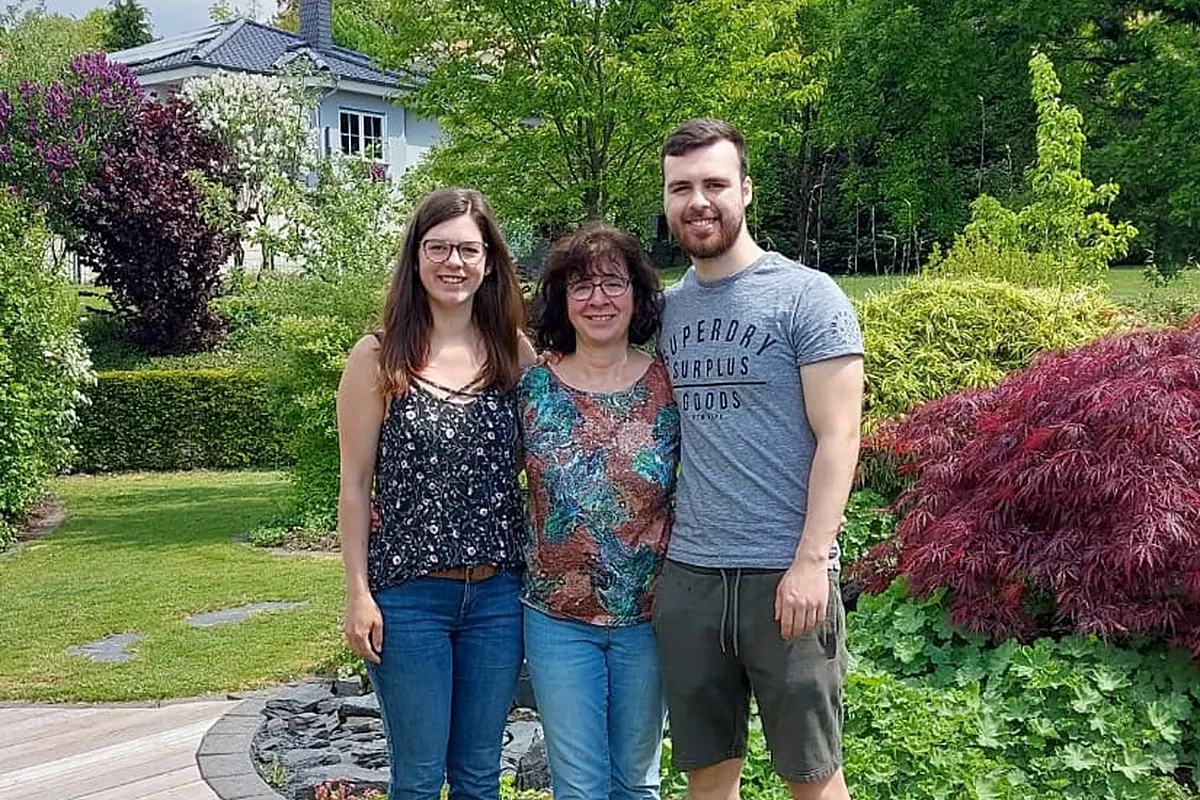
Susanne, Carmen and David Hahn rent out the three holiday homes on the Sonnenterrasse in Rieden and have known the Eifel for more than ten years.