Crystal-blue lake in the Eifel: discover the Eifel volcanoes
 Familie Hahn
Your hosts at Waldsee Rieden
7 min read
Familie Hahn
Your hosts at Waldsee Rieden
7 min read
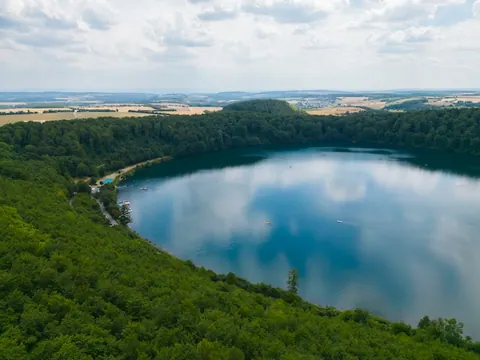
The Vulkaneifel and its maars: dreaming of a lake in the Eifel
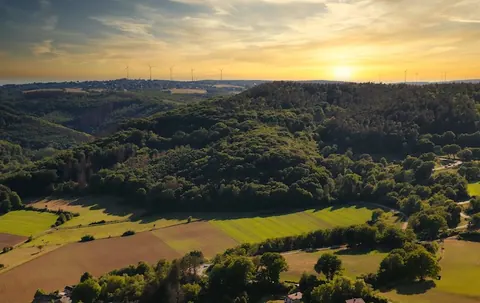
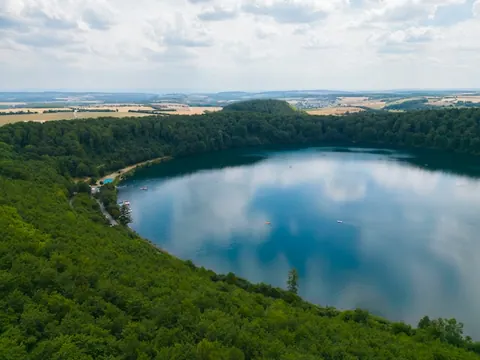
The Vulkaneifel is a part of the Eifel in Rhineland-Palatinate, most of it lying within the Naturpark Vulkaneifel nature park, and in its geological history it has been shaped by the volcanism that produced so many a lake in the Eifel. These lakes, or maars — crater lakes left behind by volcanic activity — can still be seen today and make a popular day out. More than 350 volcanoes can be traced in the Vulkaneifel, 75 of them with a maar. Some of those maars have filled with water to form lakes. If you are looking to unwind somewhere secluded and beautiful, a lake in the Eifel is always a good choice.
How the maars formed: size, depth and location
The word “Maar” goes back to the Latin noun “mare”, which literally means “sea”. The Eifel maars formed in funnel-shaped hollows created by steam eruptions of volcanic origin. The most important maars of the Vulkaneifel are introduced briefly below. The Eichholzmaar, with a diameter of about 120 metres and a maximum depth of 3 metres, is one of the smaller maars of the Vulkaneifel. It lies near Steffeln, a small village of about 620 inhabitants in the Gerolstein area, district of Vulkaneifel. The Gemündener Maar is 325 metres long, 300 metres wide and reaches a maximum depth of 38 metres. In summer part of it is used as an open-air bathing area. The maar lies immediately next to Gemünden, a small village of about 210 inhabitants in the Daun area, district of Vulkaneifel. The Holzmaar lies between Gillenfeld and Eckfeld, Gillenfeld belonging to the Daun area and Eckfeld to the Bernkastel-Wittlich area. The Holzmaar has a diameter of 325 metres and a depth of no more than 21 metres. It is almost entirely surrounded by woodland – hence the name. The Immerather Maar has a diameter of 290 metres and a maximum depth of 2.90 metres. It lies near Immerath, a small village of about 220 inhabitants in the Daun area. The Meerfelder Maar is about 780 metres long and has a maximum depth of 17 metres. It lies near Meerfeld, a small village of about 350 inhabitants in the Wittlich-Land area, district of Bernkastel-Wittlich. The Pulvermaar is one of the Gillenfeld maars in the Daun area. It is 690 metres long, 630 metres wide and up to 74 metres deep, which makes it the largest and deepest maar in the Vulkaneifel. There is a bathing area on the eastern shore. The Schalkenmehrener Maar has a diameter of 575 metres and a maximum depth of 21 metres. It lies near Schalkenmehren, a small village of about 610 inhabitants in the Daun area. The Ulmener Maar is 510 metres long, 250 metres wide and up to 37 metres deep. It lies at Ulmen, a town of about 3,380 inhabitants in the district of Cochem-Zell. The Ulmener Maar has been selected by the Union of Geological Sciences (IUGS) as a piece of geological heritage. The IUGS jury, one of the largest scientific institutions in the world, chose this maar from 181 candidates in 56 countries as one of the 3 sites in Germany to join the worldwide list, which also includes the Grand Canyon (USA) and Uluru in Australia. The Weinfelder Maar is 525 metres long, 375 metres wide and up to 51 metres deep. Its name refers to Weinfeld, a village abandoned centuries ago. On current maps the Weinfelder Maar lies in the south-east of the Daun area. It is also known as the Totenmaar, the maar of the dead, because there is a cemetery right beside it.
A drinking water reservoir for thousands of people
Not least, the maar lakes of the Vulkaneifel also matter as drinking water reservoirs. The Ulmener Maar is a good example. It has been in use as a drinking water reservoir since 1926 and today supplies about 30,000 people.
Germany’s youngest volcano
The Ulmener Maar is memorable for a record all of its own as well. Its crater is 10,900 years old, which makes the Ulmener Maar the youngest volcano in Germany.
Walking paths through the volcanic crater
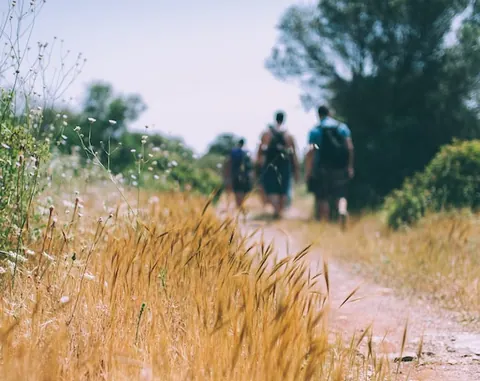
The Naturpark Vulkaneifel nature park offers any number of walking trails that lead you straight to the most spectacular places in this volcanic landscape and open up unforgettable panoramas. The Lieserpfad is a particular favourite; in 2018 it came second in the ranking for “Deutschlands schönster Wanderweg”, Germany’s most beautiful walking trail. Another very well-known route is the Eifelsteig.
The vegetation around the maars
Most of the maars lie close to woodland, so a stroll around a maar combines perfectly with a walk through the forest. There are meadows and fields along the shores as well, which completes the idyll.
If you would rather not walk alone, you can join one of the guided nature walks led by certified guides. The wild herb walk is a great favourite, for example: under the motto “So schmeckt die Eifel im Sommer” – this is how the Eifel tastes in summer – it invites you on a 2-kilometre herb walk.
Viewpoints and other things worth seeing
To enjoy the natural beauty of the Vulkaneifel to the full, it is worth visiting some of its best-known viewpoints, where the eye can wander far into the distance. The ones to mention above all are Pyrmont Castle in Roes (district of Cochem-Zell), the Bertradaburg in Mürlenbach (district of Vulkaneifel) and the Hohe Acht, the highest mountain in the Eifel.
If you like a bit of a thrill, cross the Geierlay suspension bridge at least once, or visit the Nürburgring with its visitor world. There you can take a lap with an experienced racing driver – a pure shot of adrenaline, guaranteed.
The Eifel is framed by two rivers, the Moselle and the Rhine. They meet at the Deutsches Eck in Koblenz, and there is no finer place to see it from than Ehrenbreitstein Fortress, one of the mightiest fortifications in the whole of Europe.
If you have a soft spot for castles and palaces, we would point you to the fairy-tale Bürresheim Castle, Cochem Castle and Eltz Castle. The little Moselle towns of Cochem and Bernkastel-Kues and the city of Trier have plenty of other sights in store for you as well. Trier in particular, the oldest city in Germany, is worth a visit. You could simply follow the Moselle: that brings you first to Cochem, then Bernkastel-Kues and then Trier. For the way back you can take the motorway if you prefer.
Mayen, the “Eifeltor” or gateway to the Eifel, is another strong recommendation if you are out exploring the maars. The pretty little town is not far from the Laacher See and is home to both the Eifelmuseum Mayen and the Deutsches Schieferbergwerk slate mine. Both make a perfect day out for young and old.
- The Teufelsschlucht dinosaur park
- Daun Wildlife Park
- Klotten Wildlife and Adventure Park
The Vulkaneifel has two amateur observatories, at Kötterichen and at Höchstberg. The rural setting is made for amateur astronomy: far from the big cities, astronomical objects are much easier to observe.
If you have set your heart on a holiday in the Eifel, the Eifel holiday park at the Riedener Waldsee has a range of exceptional holiday homes for you. There are holiday homes with a sauna for a wellness break, for instance, or secluded holiday homes if it is peace and quiet you are after. There are luxury holiday apartments too, offering you the very best accommodation. In most cases you can bring your dog along. Among the top places to stay there are the holiday homes “Susi”, “Tommy” and “Annika”, which offer every comfort and are booked again and again.
The last volcanic eruption in the Osteifel was about 13,000 years ago, while the last eruption in the Westeifel goes back about 11,000 years.
Several volcanoes in the Vulkaneifel are still volcanically active today. You can tell by the volcanic gases escaping, as you can see for yourself at the Laacher See.
To measure the volcanic activity beneath the Laacher See precisely, a survey campaign called “Large-N” was set up. 350 instruments – geophones – were installed around the lake with the help of some 30 scientists.
Researchers stress that further volcanic eruptions in the Vulkaneifel are entirely possible. There is no reason for visitors to let such forecasts keep them from walking around the maar lakes, though. The measurement campaigns being carried out at present are there to monitor volcanic activity. If a new eruption were on the way, in all likelihood the researchers would notice it in advance, so there would be plenty of warning time.
Your base for exploring
This destination is within easy reach of our holiday homes
Three holiday homes with their own outdoor sauna, whirlpool bath and wood-burning stove on the Sonnenterrasse by the Riedener Waldsee. This is where every day out in the Eifel begins.
Familie Hahn
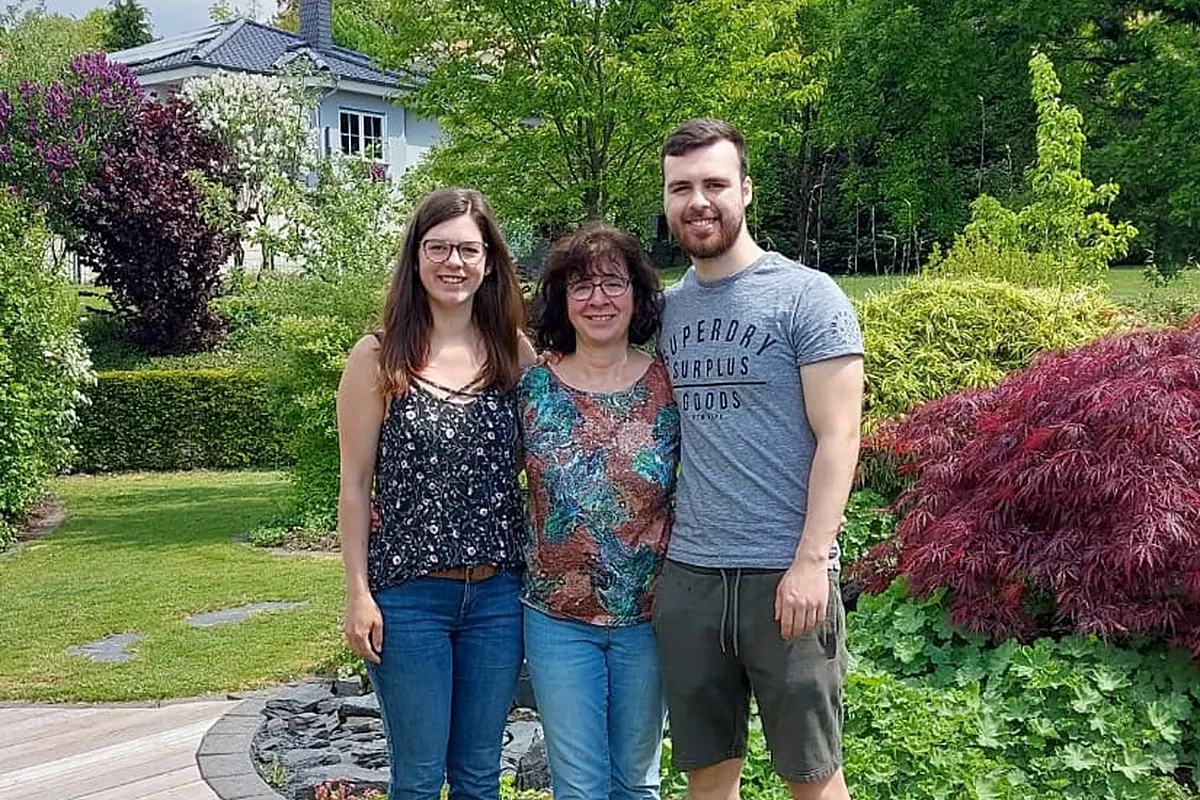
Susanne, Carmen and David Hahn rent out the three holiday homes on the Sonnenterrasse in Rieden and have known the Eifel for more than ten years.