Wine festivals on the Moselle: celebrate and unwind
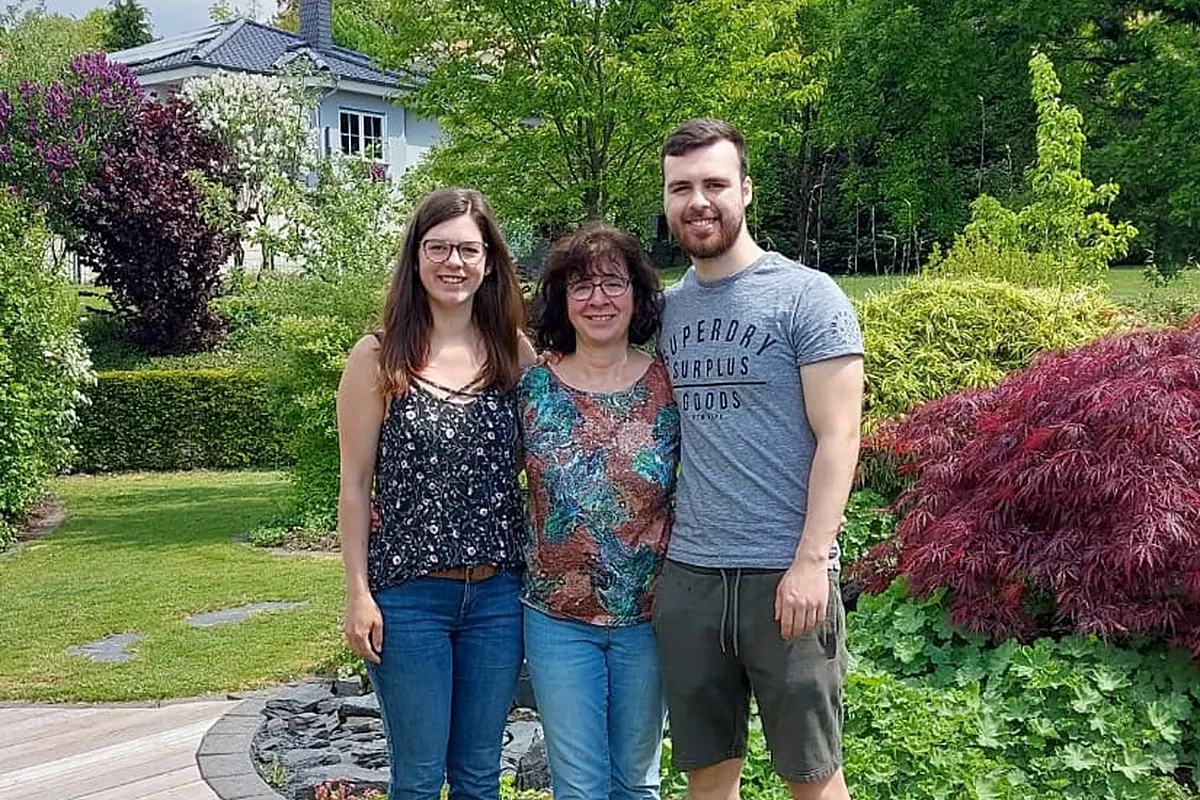 Familie Hahn
Your hosts at Waldsee Rieden
9 min read
Familie Hahn
Your hosts at Waldsee Rieden
9 min read
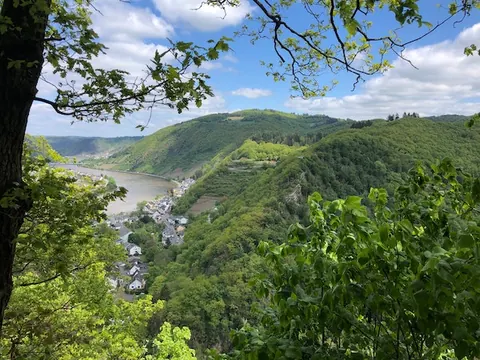
The Moselle and its wine growing
When you think of the Moselle wine region, the Moselle valley itself probably comes to mind first. In fact the side valleys of the Saar and the Ruwer belong to it as well. That is why people also speak of the Mosel-Saar-Ruwer wine region, which was the official name until 2006. The best-known wine towns are Saarburg and Konz, Trier and Schweich, Bernkastel-Kues and Traben-Trarbach, Zell and Cochem. Koblenz is part of the Moselle wine region too. The smaller growers’ villages, though, have developed their own traditions around wine as well. So some of the loveliest wine festivals take place not in the towns but in small villages.
Trier is not only the most important town in the Moselle wine region, it is also one of the oldest Roman cities in Germany. Neumagen, the oldest wine village in Germany, is another piece of history to be found in the Moselle wine region. You are in the largest area of steep-slope vineyards in the world here. And did you know that the Moselle also has the largest area planted with Riesling anywhere? Riesling grows on more than 5,393 hectares. In 2017 the Moselle wine region produced an impressive 544,080 hectolitres of wine in total.
The wine law of 1909 already refers to the area as Mosel-Saar-Ruwer, and the name appeared on labels from 1936. Since 2007, though, the labels have read simply “Mosel”: the wine law was changed at the growers’ request so that the wine could be marketed more easily abroad.
The wine region itself, of course, is far older. Wine growing probably reached the Moselle in the wake of Caesar’s legions. These lands were conquered a good 2,000 years ago during the Gallic Wars. Trier grew in this period into an imperial residence and a city of world standing. As a fashionable centre of power it had a considerable thirst for wine. Celts and Romans alike valued a good bottle.
Traces of that period are found in Trier and all along the Moselle. Wine was known to the Celtic inhabitants of the Moselle region as early as around 500 BC. Whether the Celts grew it themselves we do not know. Written records from the time of the Roman conquest and afterwards do show, however, that vineyards were laid out on a large scale from 17 BC at the latest, with the founding of Augusta Treverorum, today’s Trier.
The country along the Moselle is known for its wine. Wine growing is so deeply rooted in the local culture that the annual wine festivals are a fixture in the events calendar. A culinary tradition all of its own has grown up here, and it too has its roots in the vineyards. Wine festivals on the Moselle are an invitation to enjoy yourself and unwind.
The cultural identity of the Moselle region is unthinkable without wine, which has been grown on the slopes of the valley for almost 2,000 years. The steep vineyards shape the landscape, and the wine shapes the year, the cooking and the economy. Wine festivals on the Moselle always run over several days, celebrating the wine and the growers and giving them the chance to present what they have made.
The Moselle as an important waterway
As the second-longest tributary of the Rhine, the Moselle is an economically important waterway. That, too, is a long tradition, for the river was already used as a supply route in antiquity. Roman bridges made it possible to supply both banks. The bridges that survive show how much shipping mattered: they were built high enough for boats to pass beneath them. The Roman bridge in Trier, the Römerbrücke, still bears witness to Roman building skill today. The river rises in France and marks the border between Germany and Luxembourg. On the German stretch between Trier and Koblenz the Moselle meanders a great deal, and its course is defined by loops between steep slopes.
The Moselle was developed for shipping after the Second World War. Today there are 28 barrages along 394 kilometres of river, and between 1992 and 1999 the navigation channel was deepened to 3 metres. By the end of 2021, three locks at Trier, Zeltingen and Fankel had been upgraded with second chambers.
Every year the Moselle carries many tonnes of freight, a figure in the tens of millions. But a waterway is not only of interest for cargo: excursion boats run on the Moselle as well. Between the wine villages and the small towns of the middle and lower Moselle in particular, these boats offer a wonderful view and a great deal of calm. For anyone keen on water sports there are marinas at Koblenz and Winningen, at Brodenbach and Burgen, Löf, Hatzeport and Senheim. Treis, Traben-Trarbach, Kues and Neumagen, Trier, Konz and other places have marinas to tempt you too.
The Moselle does not stand on its own. At Toul the Canal de la marne au Rhin links it with the Meuse, the Saône and the Rhône. The North Sea and even the Mediterranean can be reached by canal.
Grape varieties grown on the Moselle
The Moselle is the largest Riesling-growing region in the world. Of course you will find far more than Riesling here. White varieties account for 91 per cent of the vineyard area in the Moselle wine region: alongside Riesling with 60.5 per cent, Müller-Thurgau dominates with 14 per cent. Elbling, Kerner and Spätburgunder are grown in appreciable quantities as well. One curiosity is that Müller-Thurgau is known here under the synonym Rivaner. A few hectares are given over to Pinot Blanc (Weißburgunder), Bacchus and Pinot Gris (Grauburgunder). Chardonnay and Reichensteiner, Ortega and Optima are considerably rarer.
Red varieties play a much smaller part in the Moselle wine region. Spätburgunder, also known as Pinot Noir, is grown on 4 per cent of the area and Dornfelder on 3.6 per cent. Regent (0.7 per cent) is found here too. The St. Laurent variety covers around 11 hectares, and the Müllerrebe or Pinot Meunier takes up a full 10 hectares across the entire Moselle region. Dunkelfelder, Merlot and Frühburgunder are grown as well, but these varieties play a distinctly minor role.
What makes the Moselle vineyards special
Wine is shaped above all by the soils the vines grow in. Slate dominates in the Moselle wine region, while on the upper Moselle you will also find shell limestone. Around the Moseltor and on the upper Moselle it is shell limestone and Keuper marl that set the tone. The varieties grown there are chiefly Elbling, Auxerrois and Pinot Blanc (Weißburgunder). On the Devonian slate of the Saar, the Ruwer and the middle Moselle, by contrast, you will find almost nothing but Riesling. Clay slate and silica-rich greywacke dominate the lower Moselle, where Riesling, Pinot Blanc, Elbling and Müller-Thurgau grow. As you can tell, travellers know these different areas by the names of their wine roads: the Luxemburger Weinstraße, the Elbling Route and the Saar-Riesling-Straße. Other routes worth following are the Ruwer-Riesling-Weinstraße and the Moselweinstraße.
The size of the estates is unusual here as well. The steepest slopes and the terraced sites have to be tended by hand, and that takes time. The roughly 60 million vines in the Moselle wine region are looked after by 2,850 wine estates. The average size of a wine estate here is 3 hectares — that is not much. As elsewhere, though, there is a shortage of young growers coming through, so estates with more than 5 hectares of vines are gradually becoming more common.
Moselle wines are of high quality. You will find Kabinett wines here as well as Auslese. Beerenauslese and Trockenbeerenauslese are made just as ice wine is. But of course the Moselle has perfectly simple table wines too, so there is something here for every taste. If all you want on holiday is to enjoy yourself and relax, it certainly does not have to be a Prädikatswein every time. Better to buy one of those before you set off home, for the special occasions in life.
Festivals and events on the Moselle
You want to relax on holiday, but you probably want to experience something as well. In the Moselle wine region the two go hand in hand. This landscape of river and vineyard has something to offer all year round. You can explore it on foot along the many well-signposted walking trails, or move from one wine village to the next on the excellent network of cycle paths. The wine estates are welcoming places, and they tempt you in with festivals full of atmosphere. Germany’s oldest wine festival draws you to Winningen on the lower Moselle at the end of August. The spectacle on the Moselle loop lasts a full ten days, and the historic village centre — well worth seeing in its own right — is decked out in colour. Taste the wines of the local growers and let yourself drift from one event to the next.
The season perhaps opens with “Moselloreley in Flammen” at Piesport, which takes place as early as July. Bands, wine tastings and a firework display keep you entertained. Traben-Trarbach draws you to its handsome art nouveau streets with the Moselwein-Festival. Zell an der Mosel has named its wine festival “Zeller Schwarze Katz”. Neumagen-Dhron celebrates a wine ship festival on the Moselle, because a Roman wine ship was found here. A replica of the ancient Roman vessel has been built and now takes visitors out on the river. As you can tell, wine festivals on the Moselle are anything but uniform. Wine is at the heart of all of them, but what goes on around it differs every time and is shaped strongly by local history.
Bernkastel-Kues hosts the largest wine festival in the region. A good 200,000 visitors come every year to watch the traditional growers’ parades and to browse the craft market and the funfair with its rides. In the evening there are concerts and performances on the open-air stages. Cochem puts on several wine festivals, among them the Mosel-Wein-Woche in May or June. Veldenz, Bullay, Ediger-Eller and other places have the odd festival for you to visit as well.
Listing every place worth seeing in the Moselle wine region would go far beyond this short guide. The whole Moselle valley and the side valleys that join it are full of historic villages and hamlets, each with its own story to tell. Via ferratas, waterways, walking trails and cycle paths lead you through the region. Trier, so interesting historically and still culturally alive today, is best discovered at your own pace and to your own taste. All along the Moselle you will come across notable buildings, castles and palaces, and traces of the Romans. Not every excavation site is open to visitors — but the local museums have done an excellent job of presenting what was found.
You can of course take a room in one of the wine villages, or in Trier, Cochem or Koblenz, in a pleasant little guest house or a larger hotel. Or you can discover the region in the pleasant summer months and stay at one of the many campsites. Nicer still, though, is a stay at Waldsee Rieden. You are close to both the Rhine and the Moselle here, which makes it the ideal base for any number of trips out. And the private holiday park at Waldsee Rieden offers you first-class places to stay.
The holiday park is laid out in terraces and surrounded by forest. The setting is very quiet and idyllic — just the thing for unwinding after a tiring day in the bustle of the wine towns. Even so, the park is easy to reach and close to the places you will want to visit. Every house here is different, because the holiday homes are privately owned and each owner has furnished their own. If you would rather not cook for yourself, there are plenty of good restaurants at the Waldsee, and they are dog-friendly too — the whole family is welcome here. Holiday Homes Susi, Tommy and Annika are among the very best places to stay.
The wine festivals take place in the months from May or June through to September. The events calendars of the wine villages and towns give the exact dates, which fall a little differently each year.
The Moselle has several marinas and is connected to the Meuse, the Saône and the Rhine as well as to the North Sea and the Mediterranean. Motorboats, canoes and kayaks are a normal sight on the river.
The Moselle wine region has grown over a long history, and there is plenty to discover here from antiquity to the present day, in buildings and in finds. Museums and galleries are worth a visit, and anyone keen on sport will find plenty to do as well.
All the larger towns on the Moselle offer day trips by boat: Koblenz, Cochem, Trier and Bernkastel-Kues are the usual departure points.
Your base for exploring
This destination is within easy reach of our holiday homes
Three holiday homes with their own outdoor sauna, whirlpool bath and wood-burning stove on the Sonnenterrasse by the Riedener Waldsee. This is where every day out in the Eifel begins.
Familie Hahn
Susanne, Carmen and David Hahn rent out the three holiday homes on the Sonnenterrasse in Rieden and have known the Eifel for more than ten years.